Got Sued? Commercial Legal Defence Insurance Covers The Big Picture

Got Sued? Commercial Legal Defence Insurance Covers The Big Picture

The insurance company’s duty to pay for your legal counsel is not about the tiny brush strokes. It’s about the canvas. It about the picture.

Commercial litigation insurance is a very useful, and often expensive, business tool to manage risk. Companies get this insurance to cover them if, despite efforts to resolve the matter, a customer or other party to their contract or work sues.

And yet, all too often insurance companies try to renege or review things in hindsight a bit, when it comes time to pay for your legal defence, right when you need a good lawyer on your side.

Often, the insurance company retreats to ‘policy wording’ arguments, to try to say that the sort of dispute is not covered.

So, how does the law deal with this gambit?

You pay their steep premiums. Then the going gets tough. But, don’t get stuck with the tab!

The law in Canada is that the insurer has a duty to pay legal counsel to defend the you, if there is even a possibility that the fight could be covered by the policy’s terms.

The issue of whether the insurer will ultimately have to pay for the overall liability, ifthe other side can prove the case, is left until later. Until that time, they must pay for your defence counsel.

This was recently illustrated in the Court of Queen’s Bench case of Creative Door Services Inc v. AXA Pacific Insurance. Creative Door had a contract to supply overhead doors. It hired a sub-trade to complete some of the work. The sub-trade was injured and had no workers’ compensation coverage, which was a breach of Creative Door’s contract with the owner. The tradesman sued and the parties claimed Creative was liable as well.

Creative asked its General Liability insurer to pay for its defence lawyers. The insurer tried to put the onus on Creative to show why the claim’s allegations are covered by the policy. It tried to skip steps. It argued that if there is no ultimate coverage for the loss in the policy, there is no obligation to pay to defend Creative.

Creative stood their ground, as expected. They argued that that there is legal defence coverage where there is a mere possibility that the claim falls within the policy.

The policy in that case provided coverage if Creative ‘becomes legally obligated to pay by reason of liability imposed by law on Creative or assumed by Creative under contract for compensatory damages because of bodily injury sustained by any person.’ The claim was a bodily injury claim, which arose in the course of Creative’s contract. It is irrelevant whether the injury claim was ‘directly’ related to the contract.

Citing the Supreme Court of Canada’s well-known decision, Progressive Homes v. Lombard General Insurance, the new Creative Door case summarized the law:

an insurer is required to defend a claim where the facts alleged in the pleadings, if proven to be true, would require the insurer to indemnify the insured for the claim,regardless of whether the allegations in the pleadings can be proven in evidence.What is required is the mere possibility that a claim falls within the insurance policy. Further, what is determinative is the true nature or the substance of the claim.

The Court confirmed that the question also involves comparing the filed court documents to the background facts, to decide if the overall dispute relates to the policy coverage.

The words ‘contribution’ and/or ‘indemnity’ in a policy covering that sort of legal claim are very broadly interpreted in favour of coverage for losses.

While the Court found that it was not clear that Creative would be found liable, that was not the proper question when considering the insurer’s obligation to pay for a solid legal defence.

The third party claim filed against Creative in this case (seeking to have them cover some of the injury loss) captured the sort of possible liability that is relevant to defence coverage.

Because there was a “mere possibility” of liability, the insurer was obligated to pay for Creative’s legal counsel to defend Creative.

It’s a long road, to defend a claim. Where’s the map?

Some strategies worth considering:

  • If you are the defendant, retain qualified legal representation to review the background circumstances and filed court materials. They can advise you on whether or not the overall dispute is going to be covered.
  • Take a firm, early position: make your claim for defence coverage through your legal counsel, and earlier rather than later. Otherwise, they can take the position you failed to notify in a timely manner (possibly excluding some coverages).
  • Stand your ground: If the insurer pushes back, it may be because they are simply following an internal guideline that has little connection to the actual merits of your views; sometimes they get lucky and someone walks away from them. Be firm, and reasonable.
  • If you are the plaintiff, also retain qualified legal counsel. Prepare your complaint or court pleadings as broadly as may still capture the ‘dispute’. This will ensure that, at the end of your battle, there may be an insurer for the defendant still around to pay (because if broadly framed, there is a better argument by the motivated defendant that it falls within the policy).

We hope you have enjoyed reading this summary. Enjoy your week!

Have Commercial Litigation questions? Walsh LLP’s Commercial Litigation group are here to help.  Contact us and read more!

In Court Matters, Don’t Be A Cowboy (I’ll Give Y’all A Few Reasons Why…)

Reason 1: Because even cowboys mend fences!

The first example, Re Koziey Estate began with a rancher promising, over the fence, “Not to worry. I wouldn’t be that way and lock you off your property,” and “I’m not going to lock you out, but I want you to move this road onto your own side.”

What was their issue in the Koziey case? One cowboy, Koziey, owned a property bordering his fellow rancher’s (Taylor’s) lands. Koziey accessed his lands by a winding country road that, in spots, wandered over Taylor’s lands. After exclaimin’ as he did above, Taylor said not much more about the matter. Koziey kept up the road and added gravel an’ all; Taylor had almost nothin’ to do with the road but built a fence alongside.

Koziey died, an’ Taylor saw fit to step it up. He built a fence keeping Koziey’s kin out. Taylor sent threatening lawyers’ letters too. Koziey’s kin had enough and took it to law.

Koziey’s side claimed they owned that road. It was “adverse possession” of the road-land for over 10 years, and they got title and can’t be thrown off their land. Taylor claimed Koziey told him he’d move the road, around about 1992 or so. He ‘let’ him use it a while.

Amongst other cowboy sayings in the case, the judge weighed in. She said this about the whole mess (maybe with a bit more law-talk an’ suchlike):

  • Koziey kept Taylor out of his land long enough to own the stitch of road runnin’ through it.
  • Taylor never did nothin’ bout it; Koziey kept at it, even knowin’ it wasn’t really his.
  • And that’s that. Judgment for Koziey.

There wasn’t any harsh words form the law for these cowboys, but just the harsh reality of the dusty road they trod ‘pon.

Reason 2: A case of “all hat, and no cattle.”

In a second episode of the Re Goold Estate saga, the claimant tried again, after the lower court dismissed her case, to persuade the Court of Appeal to accept an absence of evidence as evidence.

Yes, I know, it sounds impossible…

In Goold, a relative of the testatrix alleged that the testatrix intended to revoke her prior formal will, with a new 2006 holograph will (a hand-written and signed final, fixed intention of wishes for property).

When the testatrix died in 2014, the original of the new will could not be found. The claimant would stand to inherit on intestacy, if the new will was found invalid.

She argued, correctly as far as it goes, that where the original of the new will was in the testatrix’s possession but cannot be found when the testatrix died, there is a presumption of revocation (that the testatrix destroyed her will, intending to revoke it).

However, as the lower court noted, this is a rebuttable presumption and requires mental capacity to be intact upon the moment of that presumption (i.e. that she had it in her possession near the time of her death, but it cannot be found after death).

No will, or revocation of a will, is valid without the proper level of decisional capacity to either make or revoke it (and a legal presumption cannot, without actual actual evidence, satisfy this foundational principle).

It is the latter issue where the Court found that the claimant fell short in proving her case. Apparently, she gave very scant evidence to show that the testatrix’s mental capacity was intact, to counter some significant issues noted in that field. The testatrix suffered from Alzheimer’s, and began to lose capacity. In 2010 there were signs of this, and by 2012 a doctor apparently declared her incapable.

The Court of Appeal found that, although the lower court had other reasons to uphold the will, the main issue was that for significant periods of time before she died, the testatrix likely lacked capacity and the claimant/appellant presented no evidence to rebut that.

So, yes: no evidence really is no evidence at all.

Reason 3: “Fool me once, shame on me…Fool me…you can’t get fooled again” (to quote Pres. GW Bush)

In the final episode of the Goold plated saga, the Court of Appeal decided who would pay some real coin for this apparent tumbleweed of a claim.

In the Court’s legal costs ruling, the Court of Appeal confirmed the normal rules apply: the unsuccessful party pays a portion of the successful party’s legal costs. Two interesting arguments arose:

  • The claimant was unsuccessful, but sought payment of legal costs to her.
  • Apparently she was a lawyer who decided to represent herself (and yet also sought a legal costs award).

The Court had this to say about that approach:

Further, while the appellant is a member of the Bar, she appeared before the Court as a self-represented litigant. Costs are intended to indemnify the successful party for legal fees incurred, and while self-represented litigants might be awarded costs under R. 10.31(5) in exceptional circumstances, none are present here….

On a parenthetical note, while the appellant appeared before the Court wearing her barrister’s robes, that attire is only appropriate where counsel appears as an officer of the court, not when counsel appears as a litigant…

The Court indemnified the executors for this full legal bills out of the estate (which indeed is the law, under s. 25 of the Trustee Act), and directed the unsuccessful claimant to pay some legal costs back to the estate on the normal successful-party rule.

So, in short: “you gotta know when to fold ’em” (frankly, not always an obvious point to a party involved).

Reason 4: All that glitters ain’t gold.

This is a policy perspective: is fool’s gold enough, or do we need coin? Can “close enough” count as a document, in the case of text messages? Does it matter if that document is supposed to be a final will?

In short: that depends, on where you live!

In several common-law jurisdictions (like Canada, Australia, the United States, and Britain, for example), there are cases coming out where the courts are accepting lesser forms of documents as a “will.”

In a recent example reported by BBC News, an Australian man saved a draft of a text message (never sent!) in which he typed out what otherwise could appear to have been his intentions for property distribution. He then committed suicide. Evidently, the Australian probate courts accepted this ‘document’ as his will. In 2006, their legislation was amended to accept less formal ‘documents’ as wills.

A significant difference exists in Alberta, and other jurisdictions, from the Australian laws. While there are some law reform studies underway elsewhere, the law in Alberta is that such a text message would not be a will.

In Alberta, the Wills and Succession Act, and the case-law, requires that for a self-made (holograph) will to be valid, it must:

  • Be entirely in the testator’s own hand-writing (not typed and not partly-written/partly-typed); and,
  • Be signed by the testator.

And, while it is likely that an e-signature (such as an email signature block) could be considered a “signature” in the case of life insurance declaration / designation changes — if all the legislated requirements and specificity is met — that would not apply to a document such as a text message.

A point to ponder: what are the potential negative consequences if the law does shift toward “text-a-will” sort of documents? Will clarity be assisted, or hindered? How many wills would an executor need to potentially search for, to ascertain the final will? Are the positives of ‘convenience’ better than the potential pitfalls?

Ever wonder about these questions, or other estate litigation or estate planning questions? Walsh LLP’s Trust, Wills, & Estate Litigation and Dispute Resolution Group and our Wills & Estate Planning Group are here to help.  Contact us and read more!

Thanks for reading! Enjoy your weekend!

Estate Update: Recent Rulings Warn Against Playing The Odds & A Policy Point

Failing to see the forest for the trees

Ever dream you won the lottery? Or that some distant relative left you an untold fortune?

Many estate fights begin with such hopes, though perhaps planted in less imaginative soil.

Alberta’s courts have addressed such “games of chance” in two recent rulings. Each case has a lesson in the depth and colour painted onto the canvass of estate litigation matters:

Will challenges need actual evidence, and lots of it! In Beimler v. Kendall, the Alberta Court of Appeal upheld the lower court’s ruling that dismissed a challenge to the testator’s Will based on claims of undue influence and lack of mental capacity. The 83 year old testator made a new Will, cutting out his long-time spouse and adopted son. He instead gave his property to his sister. The spouse and son claimed that the sister influenced him into it and/or he was not mentally capable. The claimants’ evidence consisted of self-serving affidavits, uncorroborated by independent facts or expert medical confirmation of the testator’s state, at the time the Will was made. Medical charts with vague references that he “may have early dementia,” or was “slipping,” or suffering anxiety, are clearly not enough. Nor is merely being elderly enough to challenge that person’s Will. The Court of Appeal quite tersely dismissed the appeal of that ruling, as well.

The Will does not say just what you think! Some things are obvious, right? Most of us would agree on what the word “home” means. It is where the heart is. It is our base; our hearth and cooking. And, there is no place like it! That is exactly what the Alberta Court of Queen’s Bench also found, in Re Hicklin Estate. Well, sort of! The argument was about the meaning of an otherwise straightforward phrase: “To Transfer my home to my daughters, Deanna and Sherri, in equal shares, absolutely.” Did “home” include its contents, or just the home itself? Normally, lawyers would agree that a home is land, and that contents are a separate sort of gift: personal effects (or personal property). “House,” we might think, could include the “stuff” that makes it “home.” Each are often gifted separately. In Hicklin Estate, the testator left several notes before making his Will. The Court looked at those, and the drafting lawyer’s evidence and notes, to figure out what the testator intended. The foundational facts set the tone as well: the home and garage were of little value; making it “house,” over a lifetime, had amassed a trove of tools, scrap metal, and other valuable effects. In this case, “home,” included house and home!

Policy Point: How old is old enough to give a gift?

Yes, this seems a silly question, doesn’t it? Don’t we give our children allowances, and encourage them to share? And at Christmastime, children give lavish gifts of candy, iTunes songs and other media, and toys to their brothers and sisters.

And yet, wills and succession law in Alberta and many commonwealth jurisdictions around the world, have strict limitations against anyone under 18 making a Will to decide how to give all their worldly possessions (such as those may be!) if they should tragically pass away too young in life.

In Alberta, a legal minor must apply to the court to ask to make a Will, if they are not married or serving in the military!

While this might seem surprising, it is the law presently. The Law Commission in England, as reported in The Guardian’s article, recommends lowering the age to 16, citing several valid reasons: minors hold vast digital assets, can marry, and may have testamentary wishes (such as cryogenics) that cannot be honoured without a Will under present law. And, the article quotes the Commission’s wise warnings not to permit too informal a “wish,” (text, voicemail, etc.) to become a Will.

Lowering the age to 16, by itself, may be worth considering in Alberta. It would at least acknowledge the fact that younger people are, more often, holding valuable property, and have treasured wishes, that should be honoured and preserved.

No (Valuable) Copyright In Seismic Exploration Data?: “You Take The Risks And Costs, We’ll Take The Data?”

Imagine that you create a unique work of art. Surely, that work cannot simply be taken from you, copied, and given to others! It must get some sort of protection in our laws — like a copyright — right?

Think again — at least, if you invested your talents, energy, and materials into seismic exploration. That is the effect of the Alberta Court of Appeal’s new case in Geophysical Service Incorporated v. Encana Corporation (2017 ABCA 125).

Seismic data is invaluable for oil and gas exploration and development in Canada. This data, obtained by recording the results of sonic resonance reflected back from the subsurface geology, helps determine the make-up of that geology and in turn whether or not valuable minerals are present.

Background to this seismic shift

In the Geophysical Services Incorporated (GIS) case, GIS spent approximately $400 million developing a database of valuable non-exclusive (or speculative) seismic data. It was costly, risky, and complex work to develop these assets.

Within the oil and gas and exploration industry, it is known that seismic data is highly confidential. Access is restricted, and it is only shared for a fee, with strings attached. Copying and transfer are prohibited.

The provincial and federal legislation in Canada requires seismic exploration companies to obtain approvals from the National Energy Board (NEB) and other regulators, in order to access the lands and ocean areas to survey for data.

In exchange, surveyors like GIS receive a “privilege period” during which the surveyor has an exclusive right to control the data (not completely unlike a trademark or other intellectual property).

After this privilege period expires, third parties are permitted to copy the data. There is no requirement that the recipient pay the seismic company a fee for that right.

Shots fired: GIS’ legal claims & lower court rulings

In the GIS v. Encana case, GIS sued Encana, the NEB, Public Works, and other regulators, as well as numerous companies who obtained copies and even the copying companies, for what GIS termed a breach of its “copyright” in the seismic data.

GIS claimed that the legislation only allows viewing of the data, not copying (or release) of it, without paying GIS’ fees. GIS added claims of “conversion” (theft), breach of confidence (taking confidential information), and contractual interference.

The lower court (Alberta Court of Queen’s Bench) found that the legislation and regulatory scheme overrode GIS’ copyright, and permitted the disclosure of “confidential” information it claimed occurred. It also found that copyright can exist in the data, and receive protection from the Copyright Act.

So, doesn’t that mean they can protect it from release? Yes, but, there is a significant caveat.

The lower court dismissed GIS’ claims because, while the data could conceivably have a copyright, GIS traded that 50 year copyright for the shorter “privilege,” in the seismic surveying legislation and regulations.

The Court of Appeal weighs in

The Court of Appeal re-examined GIS’ claim, which on appeal GIS cast also as a case of “confiscation without compensation,” of its copyright data.

The Court found that, although protected by copyright, initially, the data that seismic companies like GIS obtain, in the context of the regulatory regime, has that copyright restricted as a condition of exploring for it. The exclusivity lasts only for the privilege period of 5, 10, or 15 years (depending on the licensing body granting the survey).

In short, the Alberta Court of Appeal ruled in favour of a nuanced public policy bargain on property rights, which encourages developing Crown mineral resources: you get rights but only for the greater good of all concerned.

Rather than rewarding only the entrepreneurial spirit, the Court chose to focus on the backdrop of exploration and development of natural resources as an overriding policy.

The policy rationale for this balance is that surveying rights are granted to companies to obtain data rapidly and to disseminate it as quickly as possible to others once the short “privilege” period ends. This generates incentive to develop public mineral resources.

While one might think it unfair to limit the property of survey companies in this data, in favour instead of developing public resources, the Court noted that seismic surveyors were involved in discussions leading to the rules, including on the time-frames in which data would be “privileged” (protected).

Seismic companies commented specifically on the time period required to recover their investment in creating the data, particularly for offshore seismic surveying. After this consultation, the regulators moved the time up from 5 years to 10 years, in some cases (while the NEB offers 15 years, and did so throughout).

Are we on the same wavelength?

The result is not terribly surprising. What GIS claimed was essentially one form of intellectual property (“privilege” granted for seismic data (5-15 years), over another (copyright: 50 years). In that sense, it follows the well-known genesis of most intellectual property: it is a bargain to recover the fruits of your labour to get protection for a period of time, after which the public interest in your ingenuity or creativity takes the field.

Yet, the lessons inherent in this decision are numerous.

One key lesson appears to be that it pays to be involved in the consultation phase of new legislation under consideration, when it may impact your long-term business strategy.

In terms of substantive legal principles, one take-away is that rights under the Copyright Act can be limited by other federal statutes such as the Canadian Petroleum Resources Act.

The Court of Appeal upheld the lower court’s finding that it did just that: restricted and exchanged the “copyright,” for essentially a time-limited “privilege” of use of your own seismic data property. Once that right is over, others have their turn.

We can offer a practical observation. In our laws, Canadian governments largely control access to the resources; when dealing with Canadian regulators and legislators, it is best business practice to be involved, at day 1, in the conversation about how legislation will work. The outcome may well impact a company’s long-term business position.

In the GIS v. EnCana case, such efforts were partly successful. The longer 15 year period provided by the NEB was directly and ironically related to GIS’ own early participation in the legislative consultation.

Thank you for reading this report from Walsh LLP’s Commercial Litigation lawyers, including Benjamin Kormos. Call us today, if you wish to discuss any business-driven legal questions, or to assist with ongoing litigation. We are happy to offer our strategic advice.

Building A Good Claim: What’s ‘In’ Nowadays In Construction Litigation?

Collecting in a challenging market: How do you reel in your cash from an unmotivated owner, engineer, or general contractor?

Construction claims in western Canada require care and attention to detail, to maximise your recovery and to avoid leaving money on the table.

Specific considerations apply, for Alberta and Saskatchewan construction lien claims in particular.

Oil & Gas Projects and Oil Sands Projects – 90 days may be the magic moment. But, it is always wise to claim within 45.

Walsh LLP’s construction litigation lawyers have previously updated you on the specific period of time within which builders’ liens must be filed, for oil & gas exploration projects (including in the oil sands), in the Re Davidson Well Drilling case achieved by our team.

In the 2016 Re Davidson case, the Alberta Court of Queen’s Bench accepted our legal arguments that a 90 day registration period can apply to such work, material, and services supplied in connection with such oil & gas projects, even on oil sands lands. See that article here: Construction Lien Rights Won for the Oil and Gas Industry.

The Alberta Court of Queen’s Bench has again confirmed that the Re Davidson case is the correct state of the law. The April 11, 2017 decision in Trotter and Morton Building Tech. v. Stealth Acoustical followed our arguments in the Re Davidson case, and applied them to a specific set of further claims where a company supplied pump house stations to a construction project on the oil sands.

Increasing your haul: what items are secured by the lien claim?

In addition to Walsh LLP’s arguments in Re Davidson that secured broader protection, in more time to file a lien, our construction litigation lawyers also argued that the items covered are also quite broad.

Construction lawyers used to feel required to argue, as a primary claim, that their client’s construction services or goods physically “improved” the lands in the sense of increasing its monetary value directly and calculably.

It is no longer absolutely necessary to show that those items increased the land’s value whatsoever, to claim a lien. This applies in Alberta and Saskatchewan.

As Walsh LLP argued in Re Davidson, the “improvement” required by the lien legislation is simply a contribution to the overall project for which you or your client have supplied work, goods, or services for which you have not yet been fully paid.

The lien rights are not restricted to claiming items that “improved” the lands in a restrictive sense of increasing its monetary value or build-up (though that is still a viable further argument).

Without intending to be an exhaustive list, items covered can include these contributions to a project generally:

  • Storage facilities or services.
  • Transport services.
  • Road construction or service.
  • Equipment rental.
  • Equipment maintenance.
  • Preparation work.
  • Support services or materials (depending on their connection with the project).
  • Certain consumables required for the above (e.g. fuel and similar consumables to run project equipment).

How close is ‘close enough?’ What lands can you secure, to claim payment?

In addition to now recognising the above breadth of claims, and that they do not need to monetarily increase the value of lands to be secured by a lien, the law also recognises that the work, materials, or services need not always be supplied to the specific parcel of land or “site” claimed. On oil sands leases, claiming against the mineral lease may be sufficient.

If there is a sufficient collateral benefit to a neighbouring parcel or site of land, a lien may also potentially secure the parcel adjacent to, or connected with, the parcel on which the “overall project” was underway. These aspects were specifically confirmed in the Re Davidson case argued by Walsh LLP, and also followed in the latest case in Trotter and Morton.

To build your construction claim properly, seek experienced legal advice, to keep current and to avoid rusting your claim away…

When It Comes To Estate Claims, Good Guidance Saves Time And Money

As the old warning goes, “There’s many a slip ‘twixt cup and lip”. In estate litigation, good guidance is essential, to avoid that ‘slip’. This is particularly so, when challenging a Will.

Contesting a Will is far more common than successfully challenging a Will.

There are a number of reasons for that:

1). Perceptions among family members and/or social pressures may prevent some properly founded claims from carrying forward to a conclusion.

2). When a claim is filed, it is settled by the parties, or partially settled by removing some issues from the table. This often occurs after disclosure of evidence and exchange of the parties’ information but before trial. This is often how claims resolve.

3). Challenging a Will is a costly, risky endeavour. Obtaining early advice from an experienced estate litigation lawyer may avoid a claimant taking unwarranted risks, or provide key strategic advice to executors and beneficiaries responding to a claim.

A stitch in time saves nine. Whether you are the claimant, or the executor responding to an estate claim, early legal advice may prevent wasted time and expensive steps.

There are important legal considerations on which a claimant or an executor should be advised, including:

  • The legal standards (established case law and customary principles) that apply to Will challenges or claims against estates.
  • The high evidentiary standard that is required to be met by the claimant or the executor, which is unique to estate claims.
  • The specific nature of the evidence that the courts require, to rule on an estate claim or Will challenge. The claimant generally bears the overall onus to prove their claim.
  • The penalties that courts issue against claimants who are not successful in their claims. Such consequences are higher for certain types of allegations than others.
  • The courts are increasingly aware of the number of claims being filed against estates, and Will challenges being brought. They have reinforced the ability to dismiss such claims at a very early stage, where they are not proven adequately.

To highlight these principles, the Alberta Court of Appeal has recently reinforced these considerations, in its April 12, 2017 decision in Beimler v Kendall.That case involved a Will challenge, on two common fronts:

  • Allegations that the testator making the Will lacked testamentary capacity; and,
  • Allegations that the testator was unduly influenced by someone to change his Will (that ‘someone’ is usually the new beneficiary, whose entitlement is challenged by the claimant).

The claimants in the Beimler case were the testator’s (deceased’s) common law wife, and his informally adopted son.

Following a series of Wills that named them as beneficiaries of his estate, he changed his Will to remove them as beneficiaries, and named his sister as his sole beneficiary. He was 83 at the time of his newest Will, and in ill health (in hospital).

The sort of evidence advanced by the claimants in Beimler is common. It is also commonly unsuccessful. Their claim included allegations that:

  • The sister was manipulating an elderly man to change his Will.
  • The testator was under his sister’s power, having first granted a Power of Attorney to her and, in turn, this influenced him to change his Will to give her his estate.
  • The beneficiary had care for the testator’s medical care (i.e innuendo of influence).
  • a conspiracy by the beneficiary to change the Will.
  • The testator allegedly had dementia and “lacked capacity” and was “slipping mentally” (sweeping statements, without specificity).

Equally common in such claims, the executor and beneficiary responded with evidence that included affidavits from relatives confirming the testator’s mental abilities, and an affidavit from the lawyer who prepared the Will at issue, confirming that:

  • He assessed the testator’s testamentary capacity from a lay standpoint (checklist of observed behaviour relevant to the legal test for testamentary capacity).
  • He ensured that there was no influence by anyone on the testator for any of the three occasions on which he met with the testator before the testator signed his Will.
  • He verified that the testator’s wishes were his own, and specifically that they were not those of his sister (the new beneficiary responding to the challenge).

The Court of Appeal found that the claimants’ evidence was largely self-serving, and not corroborated (which is a common shortcoming in estate claims).

Although the medical evidence showed diminishing cognitive abilities, it fell far short of supporting the claimants’ allegations that the testator lacked task-specific mental capacity to make a Will (often expert evidence is required, together with very significant lay evidence to lay a factual foundation for such expert opinion evidence).

The Court of Appeal upheld the lower judge’s dismissal of the Will challenge at an early stage, and without a trial. The claimants simply did not advance sufficient, specific, corroborated evidence to support their allegations. Mere suspicion by disappointed prior beneficiaries is not enough.

This is a common end for such attempts, where the evidence or argument is not robust and detailed enough to support the claim. The courts strongly censure such unsuccessful attempts that are advanced to a hearing that uses scarce publicly funded judicial resources.

Claimants are wise to avoid this sort of scene, and executors are best equipped to respond to it, by obtaining legal advice at an early stage.

The unsuccessful party is often left paying the tab, and the penalty can be quite high indeed…

Walsh LLP Partner Contributes To Homes Of Hope Home-Build In Tijuana, Mexico

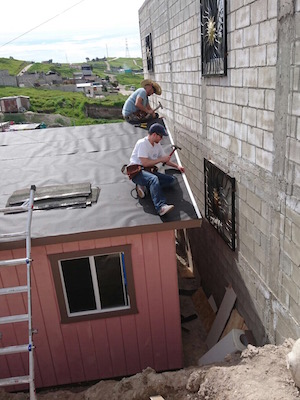
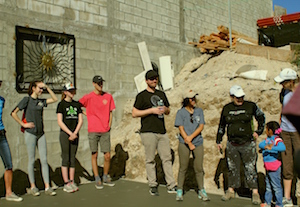
Walsh LLP Partner and President-Elect of Rotary Club of Calgary West, Benjamin Kormos, traveled to Rosarito, Mexico (Tijuana State) on March 2-5, 2017 to assist with the Homes of Hope home-build with other Rotarians.

The Rotary Club of Calgary West and the Rotary Club of Fish Creek partnered with Homes of Home (and Youth With a Mission), to build 5 homes in 2 building days in Rosarito, Mexico.   The Homes of Hope project provides homes for families that otherwise would not be able to afford basic, safe housing.

Pictured is Walsh LLP’s Benjamin Kormos, together with other Rotarians contributing to this new home for the Peña family in Rosarito, Mexico.

Walsh LLP Lawyers Argue Constitutional Case Before Supreme Court Of Canada

Brendan Myers Miller and Josh Sutherland of the Regulatory, Criminal and Public Law Group at Walsh LLP argued before the Supreme Court of Canada on February 14, 2017.

Mr. Miller and Mr. Sutherland argued that, due to the serious nature of securities offences in Alberta, those accused of such charges are constitutionally entitled a jury trial. The punishment for someone convicted of a securities offence in Alberta is up to five (5) years and six (6) months less one day in jail per conviction, including default time for failing to pay the portential $5 million fine. They argued that, because of this serious potential sentence, a jury trial is the proper manner to try such charges.

Although in the Supreme Court of Canada’s R. v. Aitkens decision, the Court did not yet accept this argument in this particular case, Mr. Miller and Mr. Sutherland presented a strong, effective argument and the Court left open the question for different case, whether certain sentences in legislation can provide the right to a jury trial, where the sentences are harsh.

Pictured are Joshua Sutherland (left) and Brendan Miller (right), at the Supreme Court of Canada.

Commercial Litigation Update: Alberta Court Of Appeal Finds That Claim For Injury At Mexican Resort Is Litigable In Alberta

The Alberta Court of Appeal has found that a claim for injury at Mexican resort will proceed in Alberta’s courts.  In this interesting case, the most important finding was that the vacation contracts were formed in Alberta.  See the short summary here: https://lnkd.in/gkAX5Xe.

The claim was about a severe injury suffered at the resort.  An Alberta woman drank a clear, odourless, liquid chemical from minibar. The bottle, from which she took only a few large gulps of what she believed was bottled water, actually contained a very caustic commercial chemical cleaner used to clean the shower tile grout.  The young lady suffered severe injuries, which required more than 80 surgeries to repair.

The legal result in this case is interesting, because it confirms that Alberta courts can hear claims for injuries suffered outside of Alberta, and even outside of Canada, where there is a clear contractual or other connection to Alberta.

Save Needless Worry! Get The Grant – Probate and Executor Liability

Save needless worry! Get the Grant of Probate.

Personal Representatives (Executors) or Trustees who take steps before obtaining a Grant of Probate (or Grant of Administration) from the Court are taking on serious risks of personal liability.  They risk becoming seen as what is legally termed a “de facto trustees (trustee de son tort).”  Effectively, that means operating without confirmed authority of a Trustee (or Personal Representative / Executor as a specific type of trustee), when in fact that authority may not be completely sound until it is proven to the Court and the Court issues a Grant to you, to confirm that authority.

And, it is important to note, liability is strict in a case where someone takes on the role without obtaining the Grant.  In comparison, as a practical and legal matter there are more defences to a Personal Representative’s activities if a Grant issued beforehand.

It is important to note, as well, that the job (if taken on) is onerous.  Precise accounts of financial matters are required: See Manitoba court’s decision in re: Bereskin Estate: https://lnkd.in/gnrNGDs. These principles may be applied to a Power of Attorney document as well.

Speak with one of our Estate lawyers if you have questions on this, or if you wish to apply for a Grant of Probate (or other Grant) to confirm your authority to act under a Will for an estate.  We can also advise you on your various legal obligations in acting as a Personal Representative (Executor) or Trustee.